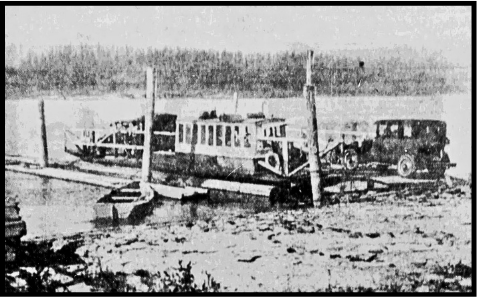
The Cascade Locks-Stevenson ferry, operated by Cascade Locks resident Karl Rosenback from 1919-1926. The ferry made an average of 22 trips per day. Photo from the Seattle Star.
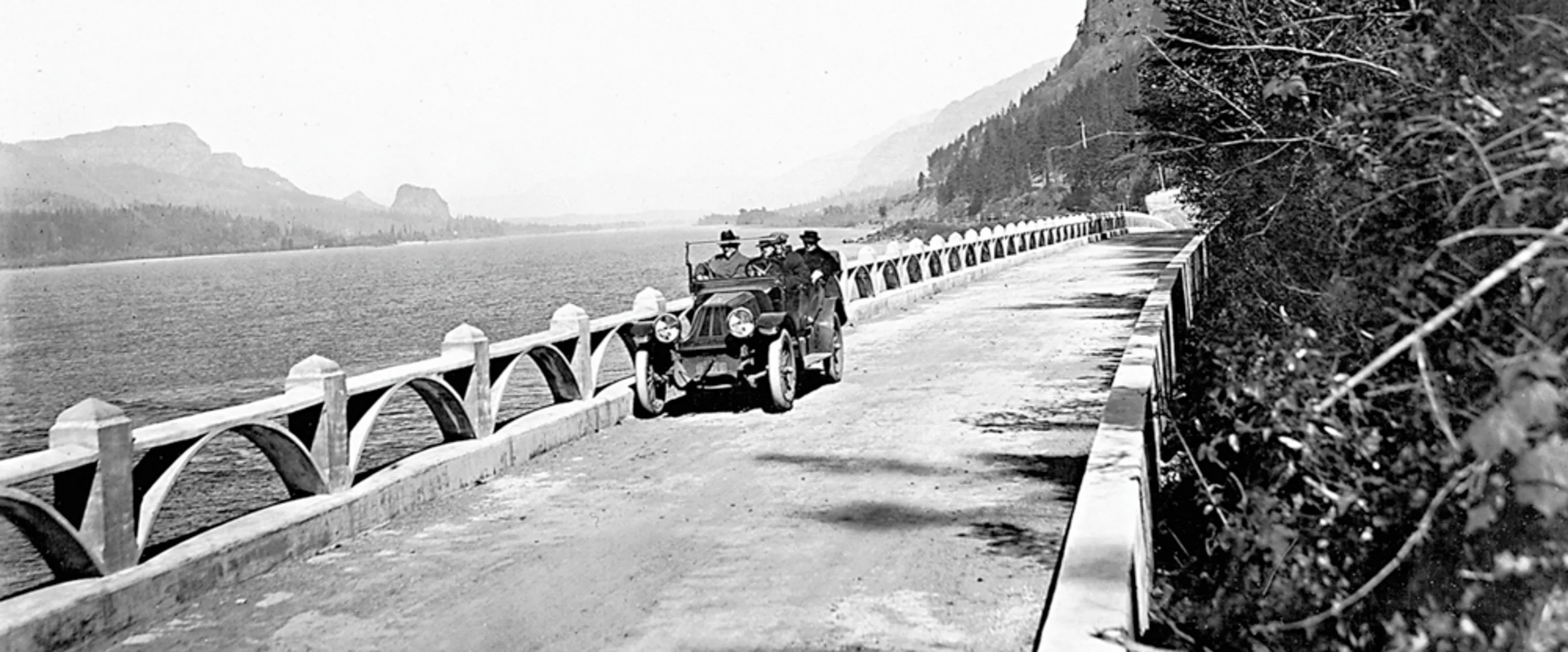
The Columbia River Highway was the first scenic highway constructed in the United States. The section stretching from Portland to Hood River was completed in 1916, with the highway reaching Cascade Locks in 1915. The more-rugged North Bank Highway connected Vancouver to White Salmon by 1919. Without a bridge, ferries made loop travel possible between Stevenson and Cascade Locks. As cars became more affordable, the thrill and novelty of driving swept the nation. Traffic along these scenic highways increased and the demand for a bridge followed.
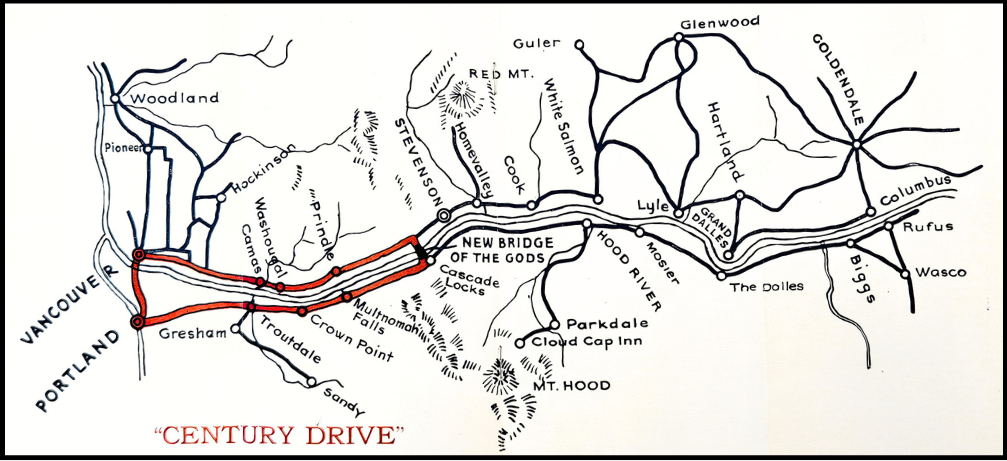
The 100-mile “Century Drive” loop was an automobile tourism experience. Map from the Bridge of the Gods Corporation prospectus.
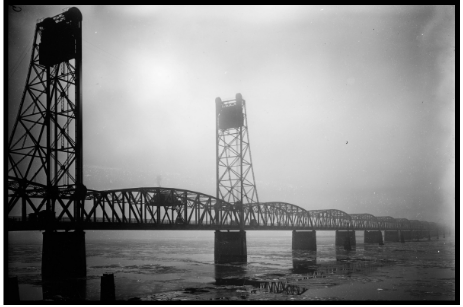
The Interstate Bridge, 1919
The Interstate Bridge connected Portland, Oregon to Vancouver, Washington in 1917. Seeing the success of that project, Vancouver resident George S. Allen set his sights on Cascade Locks. Allen worked for the Warren Construction Company building the Columbia River Highway. During the course of this work, he identified the narrow section of the Columbia River at the Cascades as an ideal site for a bridge.
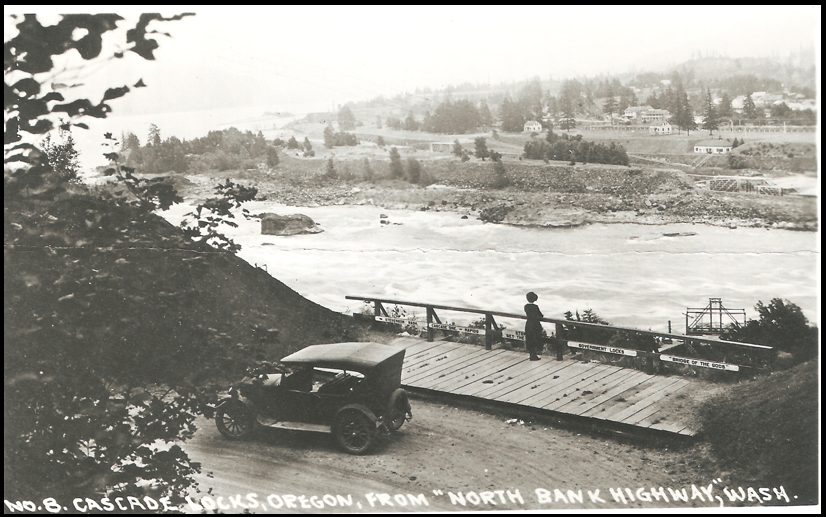
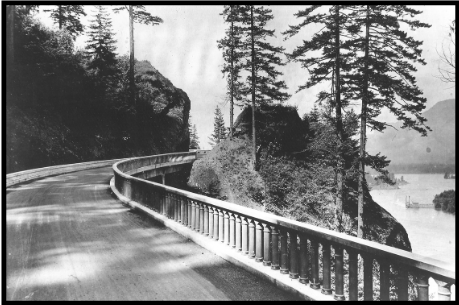
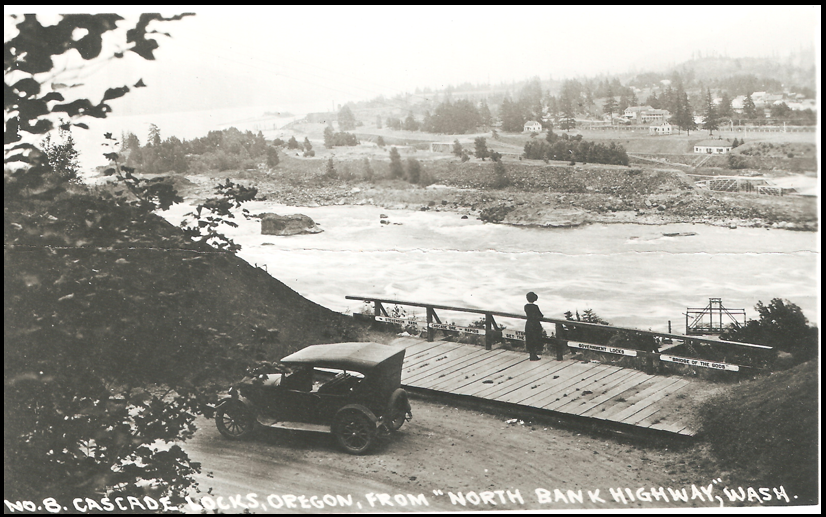
The scenic overlook for the Cascade Locks on the North Bank Highway near Stevenson, Washington. The style of pavement used on the North Bank Highway was macadam, where oil or tar is poured over gravel.
Allen brought in initial investors to found the Interstate Construction Corporation. His earliest and most enthusiastic partner was Clark County Judge A.L. Miller. They initiated the paperwork to build the new bridge. Congress approved the filing and the Department of War issued a construction permit to the Interstate Construction Corporation in 1920. Shortly after, the company began doing business under the name “Bridge of the Gods Corporation” to attract additional investors.