
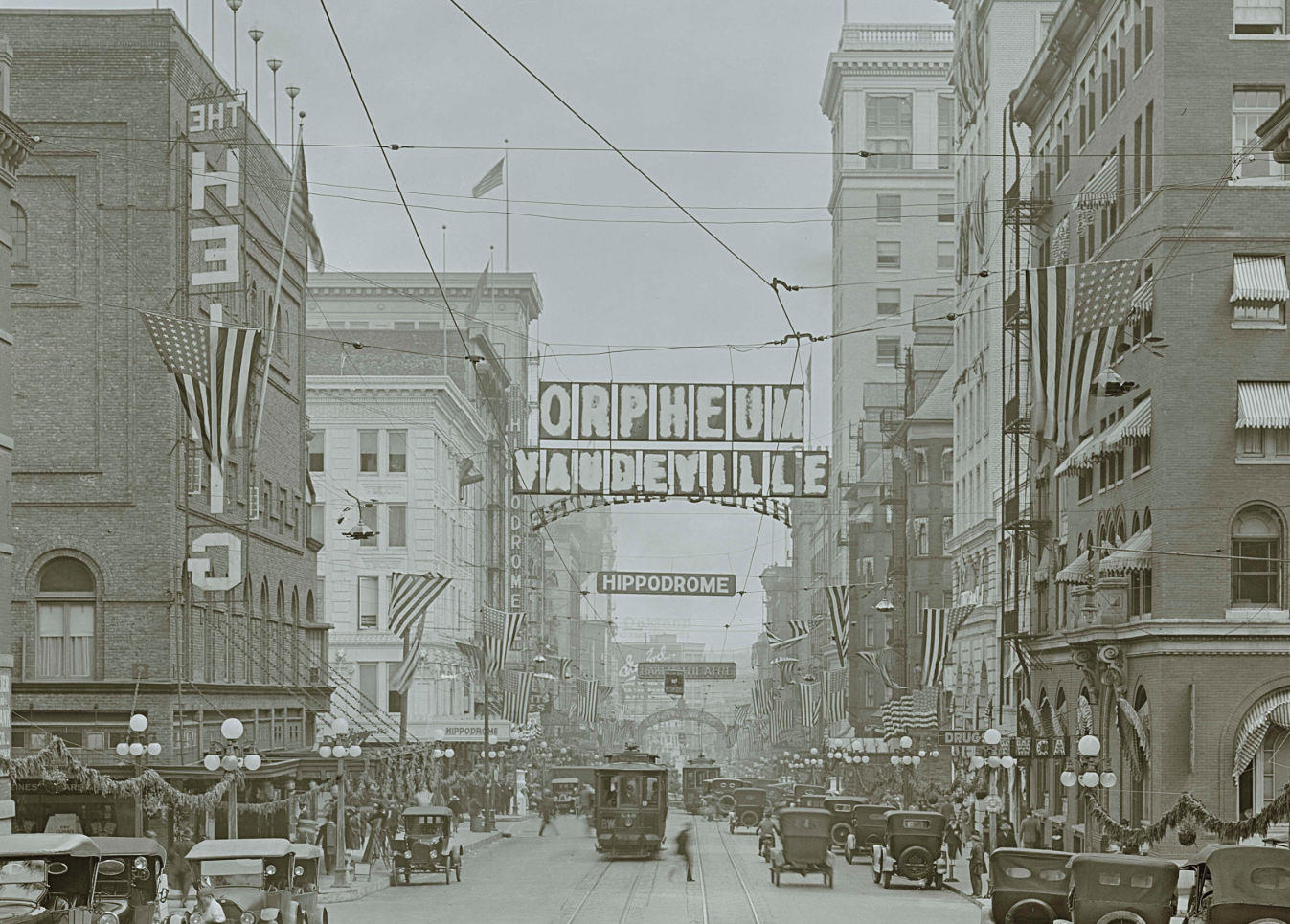
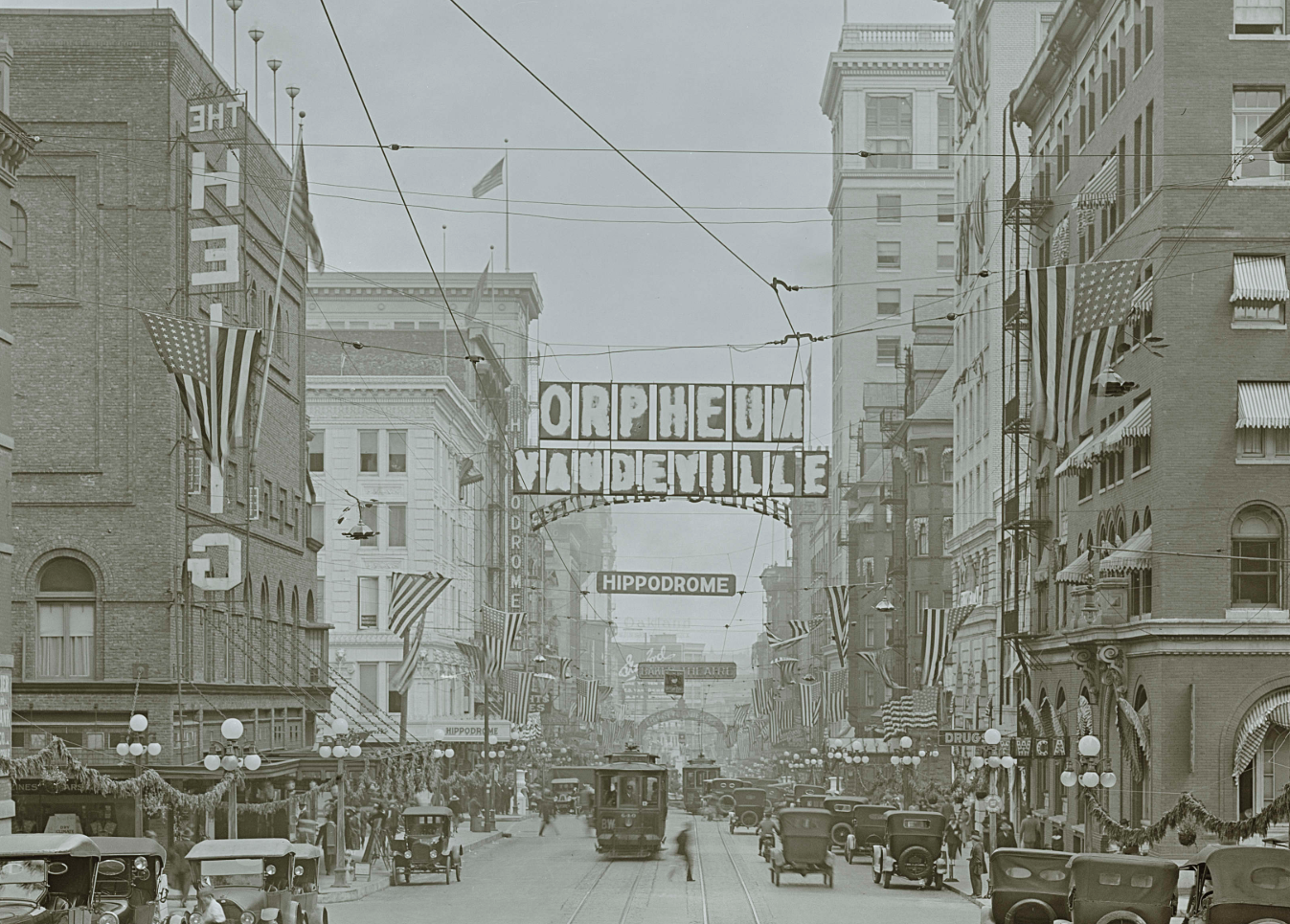
SW Broadway in Portland during the 1919 Portland Rose Festival. The Heilig, Orpheum, and Hippodrome are all advertised in this shot from Portland General Electric Company. Courtesy of Oregon Historical Society.
McGettigan’s career included tenure as a reporter for The Oregonian, Portland Telegram, and Vallejo Evening News, followed by ten years of managing Heilig theaters in Portland. Over those 10 years, he was the publicity manager for the Heilig, Orpheum, and Empress theaters, and general manager of the Orpheum. During his tenure, McGettigan would have booked two-a-day vaudeville shows, with a 10-cent afternoon matinee followed by an evening show. Vaudeville was a form of stage variety shows that dominated American popular culture from the 1870s through the 1930s. Shows featured rotating unrelated acts that included everything from comedians, singers, jazz bands, acrobats, and magicians, to novelty performers such as “tap dancing, sword-swallowing, trained dogs, trained ducks, contortionists, [and] jugglers.”
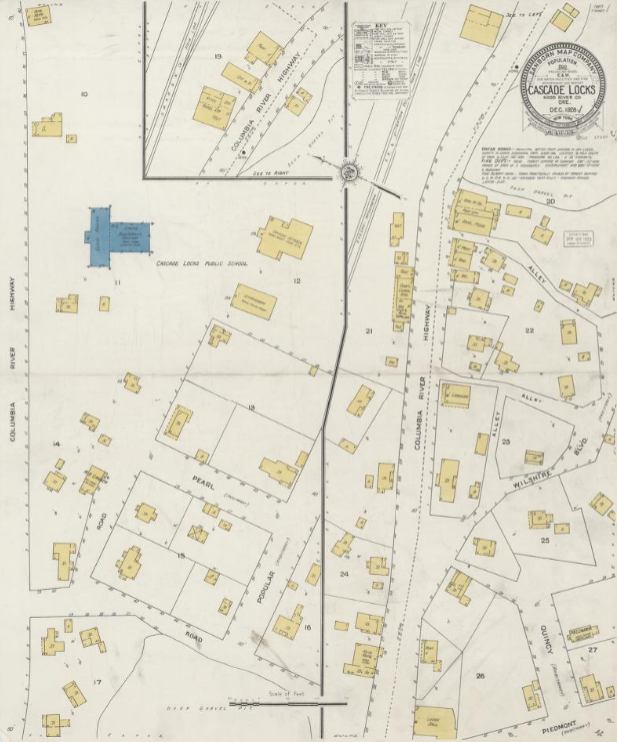
Cascade Locks in 1928. Sanborn Fire Insurance Map shows the placement of buildings, street names, and building materials. McGettigan’s purchase included most of the properties on this map. Courtesy of the Library of Congress.
Vaudeville declined rapidly with the rise of radio and video in the late 1920s. Following a theater strike, McGettigan transitioned into the landlord business. He purchased 167 acres along the Columbia River Highway from the Oregon-Washington Railroad Navigation Company, which included the downtown core of Cascade Locks. This purchase included at least 80 tenants who owned businesses and homes on the property. He made this investment because of the hype surrounding the opening of the Bridge of the Gods in October 1926. McGettigan planned to subdivide the property and sell it in smaller lots. Visionaries approached him with ideas including a state park with a “sightly view” and “statue fitting the historic interest,” and received inquiries about the erection of a scenic hotel, restaurants, a motion picture house, dance hall, and other buildings. The land for the state park, now the Bridge of the Gods trailhead for the historic Columbia River Highway State Trail, was sold to R.W. Carroll, who gifted it to the state in 1928.
McGettigan never lived in Cascade Locks, instead splitting his time between Portland and Seaside. After only playing the real estate game for 5 years, he quietly sold the property to J.B. Laber, a Portland-based developer, in 1931.
Off the Rails is the Cascade Locks Historical Museum's blog for the fascinating stories and research side quests that don't always make it onto the exhibit floor. From wayward river travelers to forgotten footnotes of Gorge history, we follow the tracks wherever they lead.