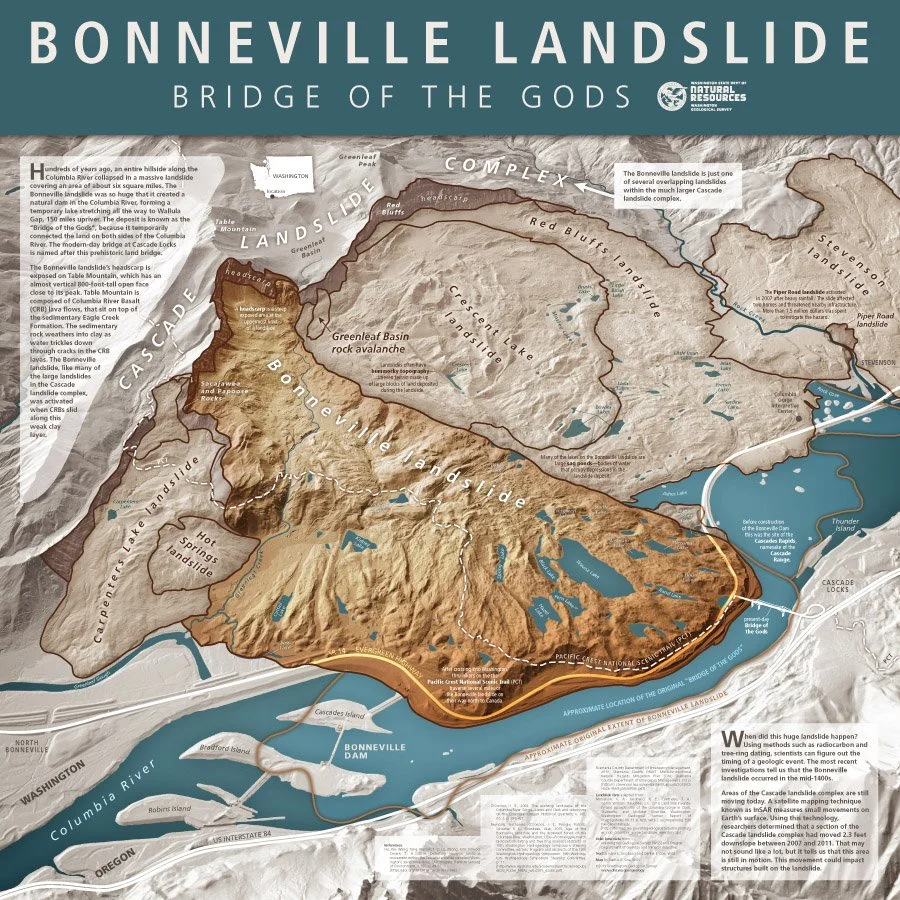
The Cascade Landslide Complex is a series of landslides on the north bank of the Columbia River. In the mid-1400s, the most recent of these landslides covered this part of the river basin. It buried the previous river channel, creating an earthen dam up to 200 feet high. The dam formed a lake of water 150 miles upriver.
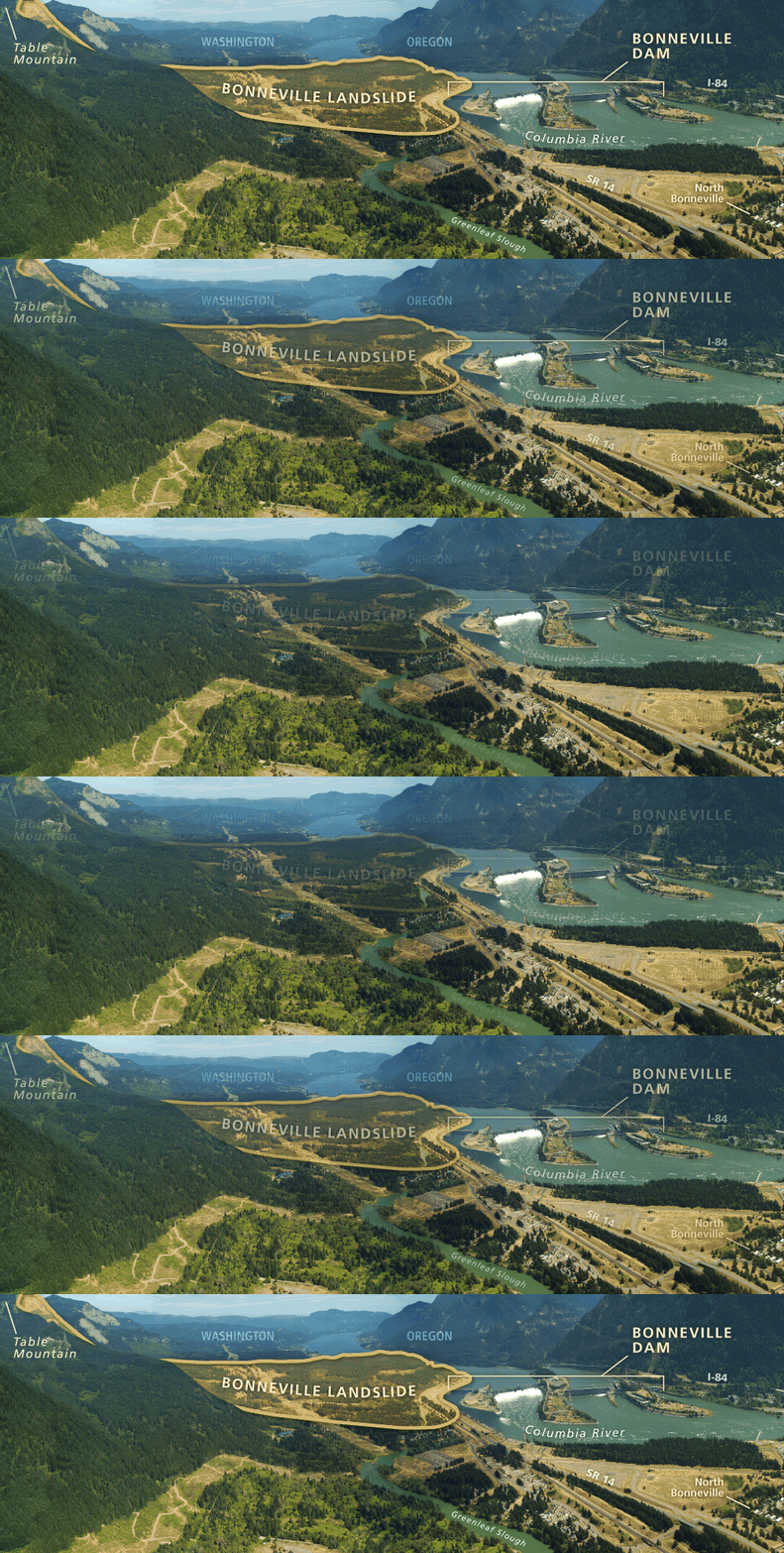
The most recent landslide in the Cascade Landslide Complex blocked the entire Columbia River between 1400 and 1500 C.E. Diagram by Dan Coe, Washington Department of Natural Resources.
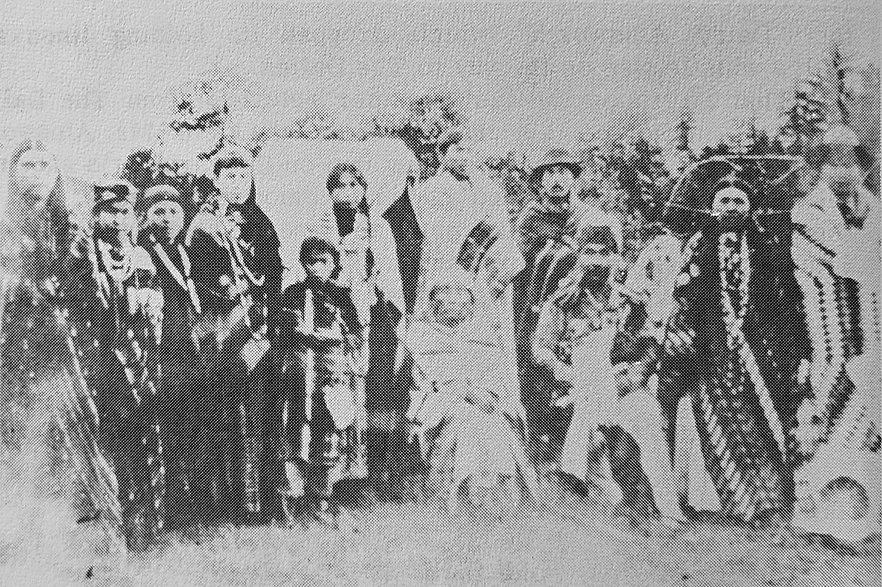
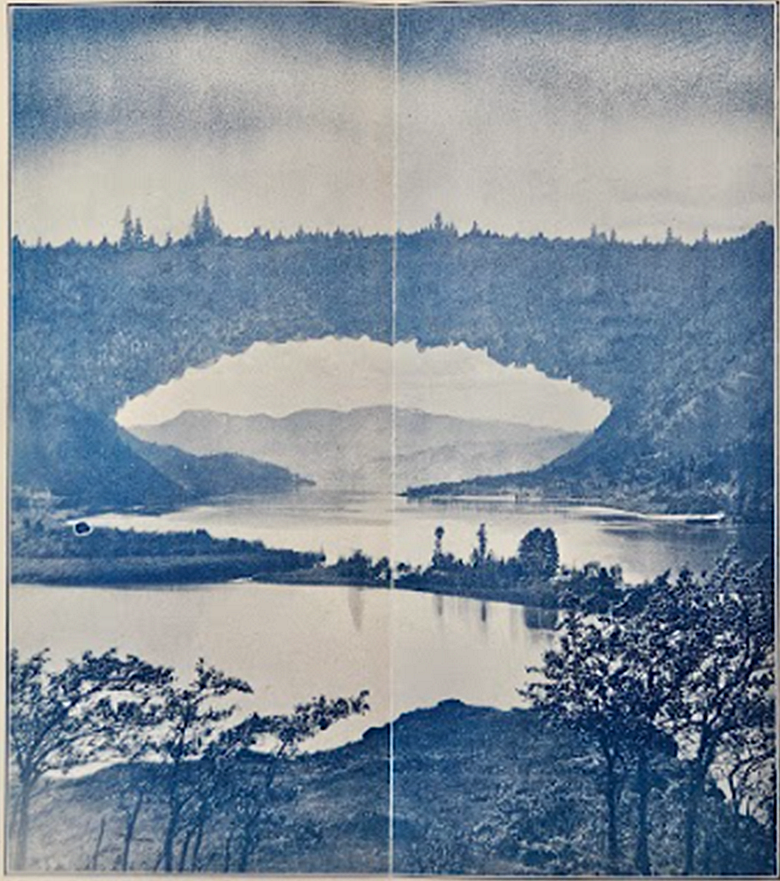
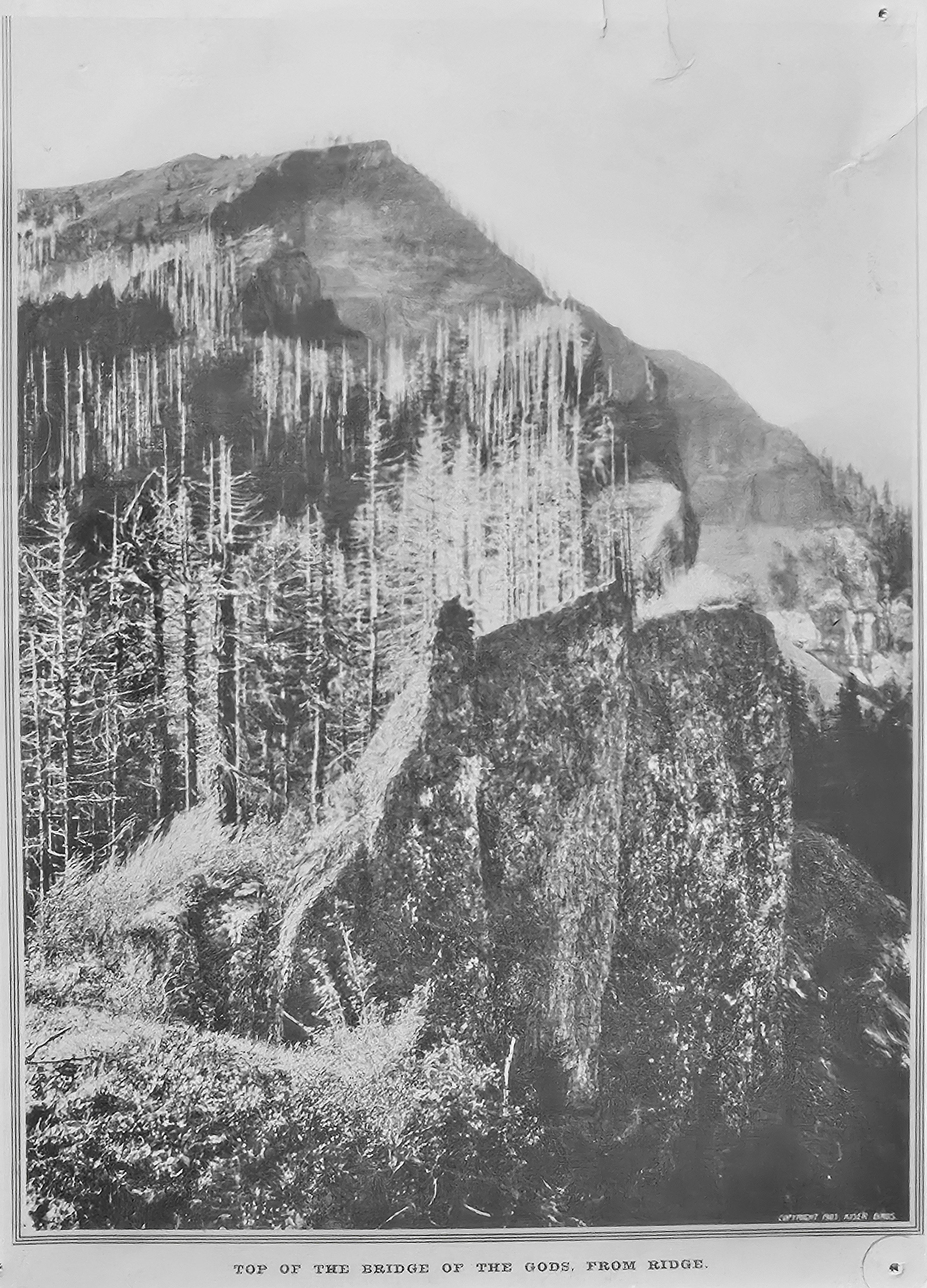
Oral history collected from the Cascades Watlala community, who lived at the Cascades year-round, said that their “papa’s papa walked across the mountain bridge.” Warcomac and Miller family photo, circa 1898.
This cataclysm had a significant impact on the lives of local Indigenous communities. It became the subject of oral history and storytelling throughout the Northwest. The stories hold memories of the volcanic eruptions and earthquakes that caused the landslides and how the earthen dam drowned the forest and blocked salmon from traveling upriver. The stories also tell how the debris washed out and formed a land bridge large enough to canoe beneath. This bridge changed travel and trade. Euro-American settlers translated the name of the land bridge, “Tahmahnaw,” to “Bridge of the Gods” when they transcribed Cascade Watlala oral history in the late 19th century. Despite consistent narratives throughout the region, some debated if there ever was a land bridge over the Columbia River.
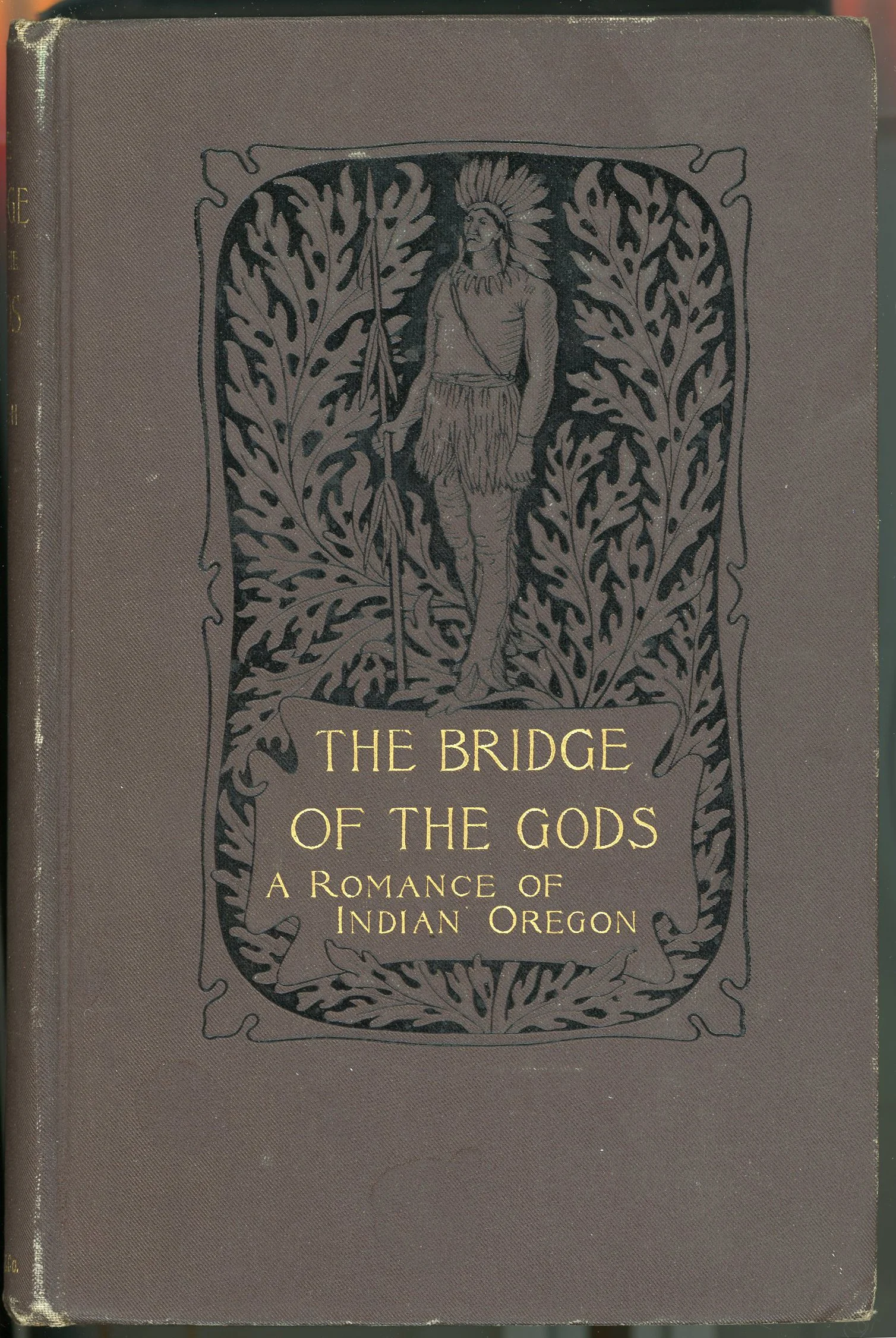
The first edition cover of “The Bridge of the Gods: A Romance of Indian Oregon” by Frederic Homer Balch, 1890.
Euro-American authors appropriated and romanticized these Indigenous stories. The most widely-read version was Frederic Homer Balch’s “The Bridge of the Gods: A Romance of Indian Oregon,” published in 1890. Balch did extensive interviews with Klickitat and Cascades elders to create this novel. Balch then took significant liberties developing his narrative, but is known for being the first Euro-American author to feature Indigenous characters in leading roles and for advocating that Indigenous knowledge should be accepted as historic fact. A commercial success, Balch popularized the legend and solidified the moniker “Bridge of the Gods” as a regionally significant and nationally recognizable name. This book was continuously in print for over 100 years, and inspired multiple stage and film adaptations.
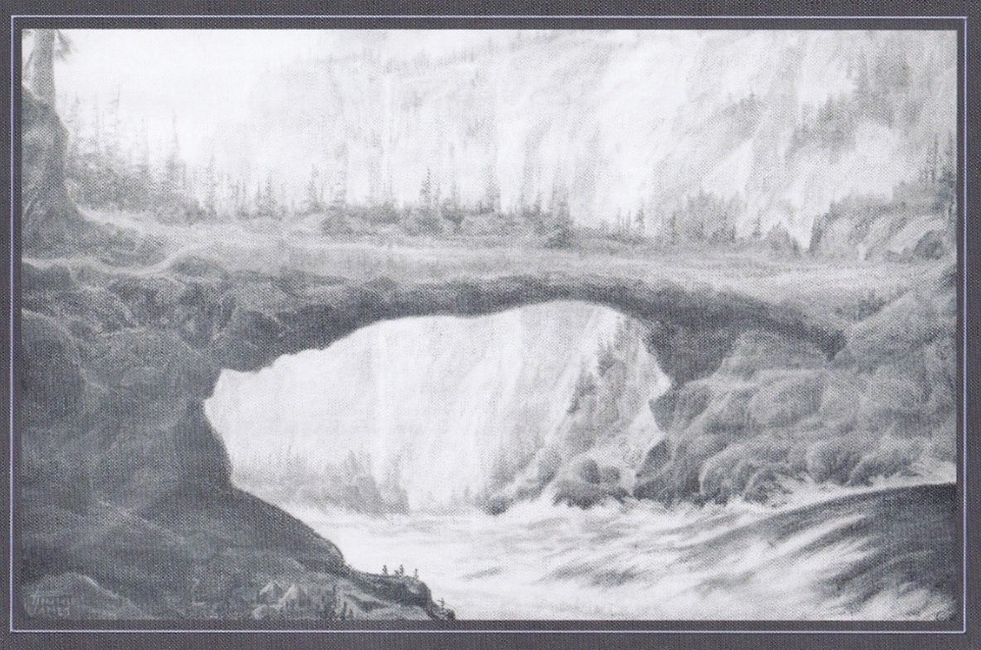
The romanticized versions of the Indigenous legends and the spectacular natural beauty of the Cascades captured the imagination of artists. Inspired by what they could see, artists imagined a sweeping stone bridge attached to the cliffs on Table Mountain. This vision was published in numerous popular texts. Art and storytelling were critical to garner public support for building the new Bridge of the Gods.