History

Legendary Namesake

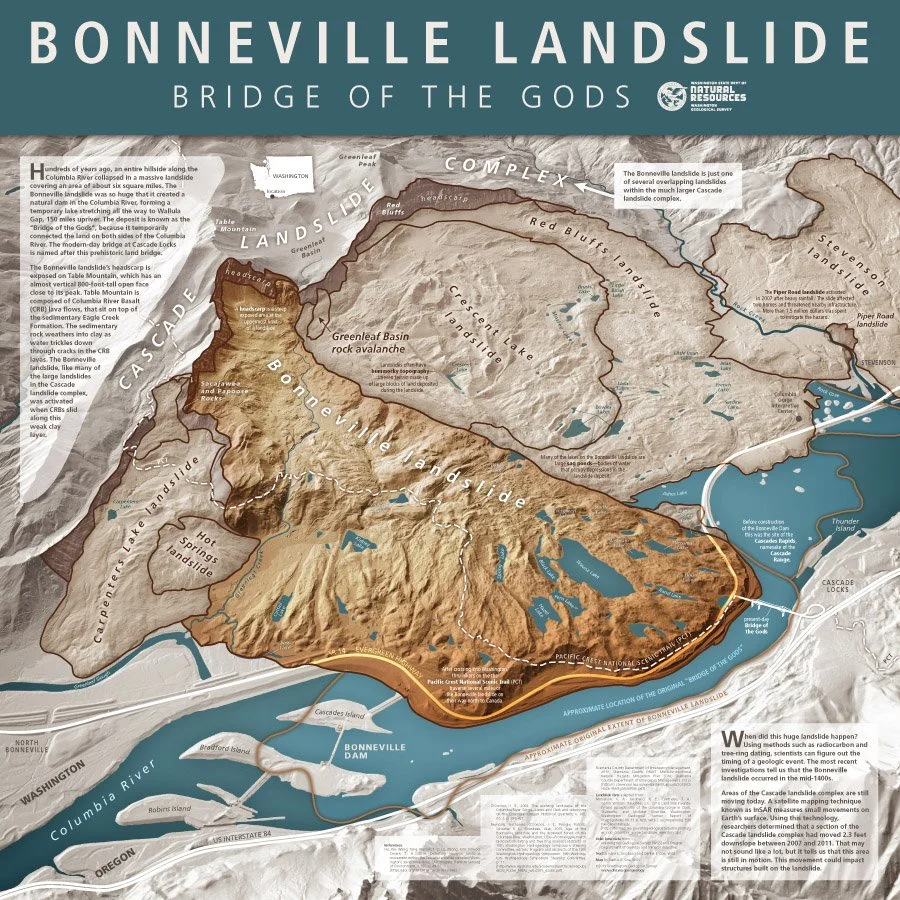
The Cascade Landslide Complex is a series of landslides on the north bank of the Columbia River. In the mid-1400s, the most recent of these landslides covered this part of the river basin. It buried the previous river channel, creating an earthen dam up to 200 feet high. The dam formed a lake of water 150 miles upriver.
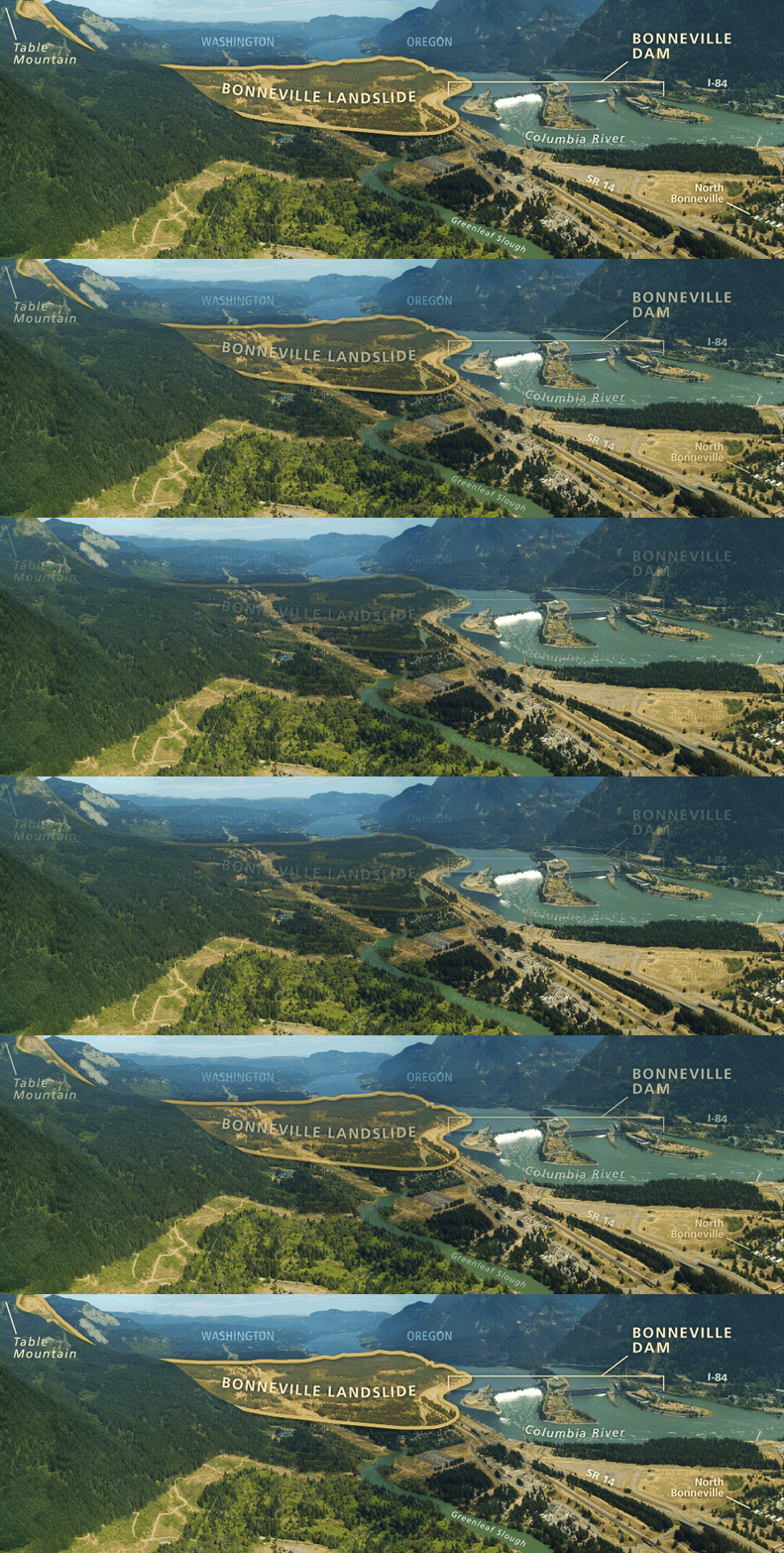
Moving diagram of the Bridge of the Gods landslide. A scenic photo of the Columbia River Gorge near the Bonneville Dam, looking upriver. The photo is animated to show the flow of the Bonneville landslide, with labels that appear over features.

The most recent landslide in the Cascade Landslide Complex blocked the entire Columbia River between 1400 and 1500 C.E. Diagram by Dan Coe, Washington Department of Natural Resources.
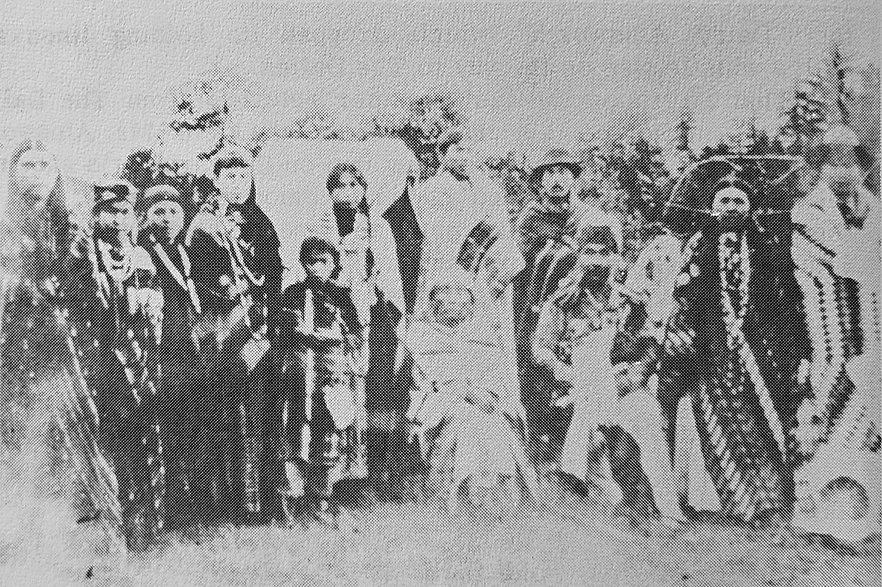
Black and white family photo of Warcomac and Miller family circa 1898. A group of adults and children of varying ages stand, looking at the camera,  posed in traditional regalia.

Oral history collected from the Cascades Watlala community, who lived at the Cascades year-round, said that their “papa’s papa walked across the mountain bridge.” Warcomac and Miller family photo, circa 1898.

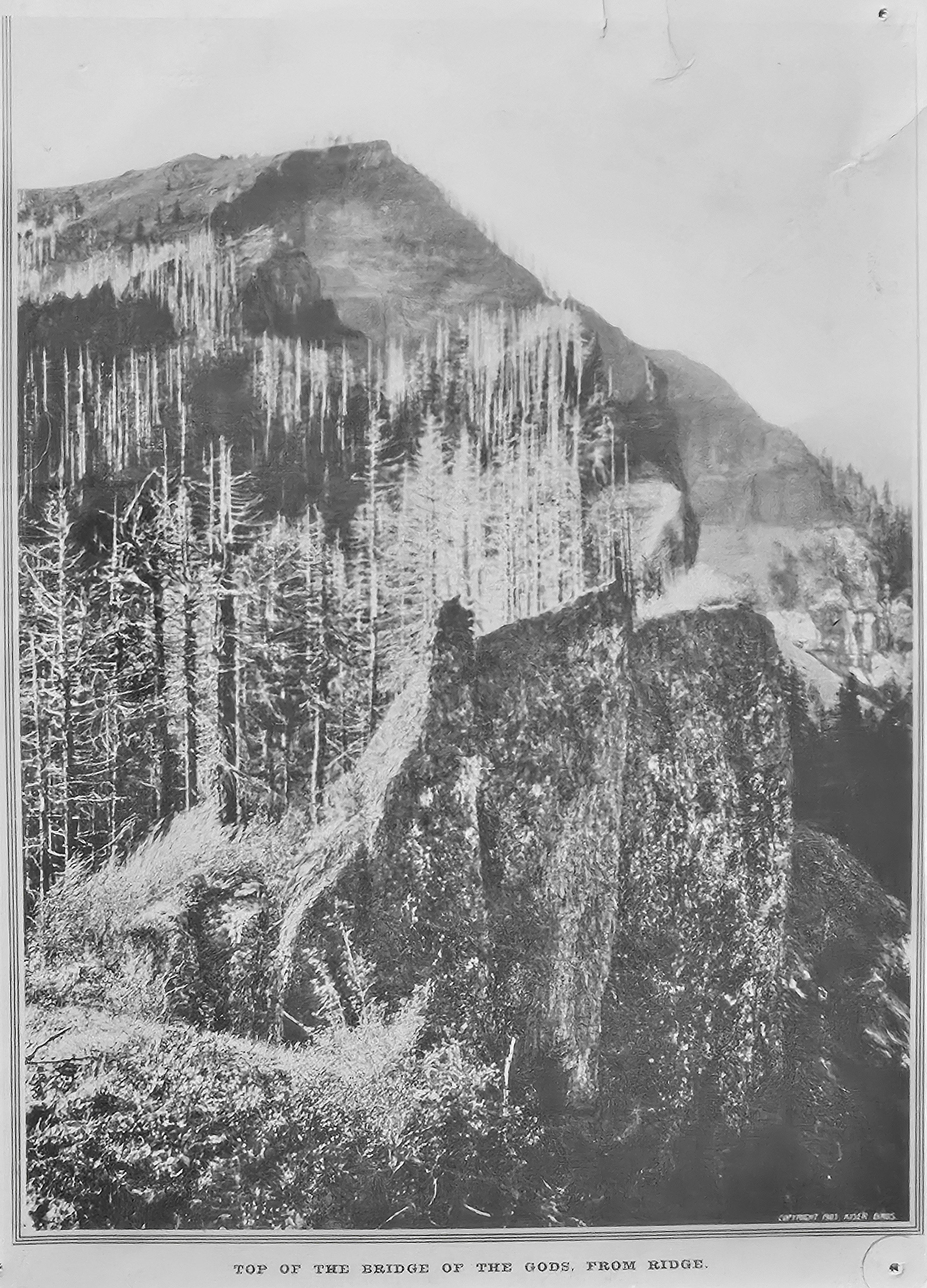
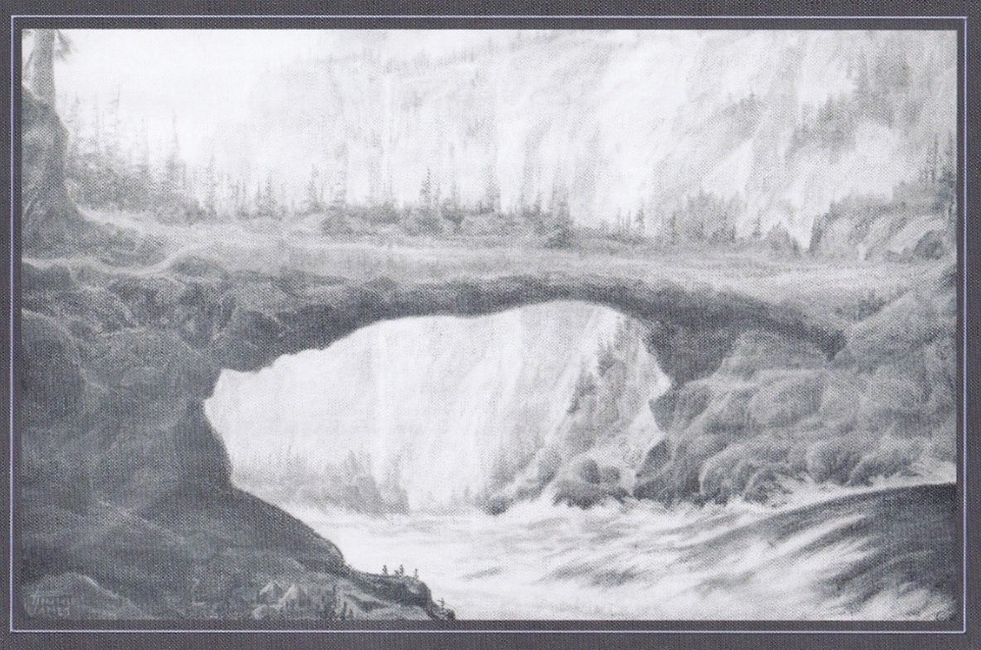
This cataclysm had a significant impact on the lives of local Indigenous communities. It became the subject of oral history and storytelling throughout the Northwest. The stories hold memories of the volcanic eruptions and earthquakes that caused the landslides and how the earthen dam drowned the forest and blocked salmon from traveling upriver. The stories also tell how the debris washed out and formed a land bridge large enough to canoe beneath. This bridge changed travel and trade. Euro-American settlers translated the name of the land bridge, “Tahmahnaw,” to “Bridge of the Gods” when they transcribed Cascade Watlala oral history in the late 19th century. Despite consistent narratives throughout the region, some debated if there ever was a land bridge over the Columbia River.
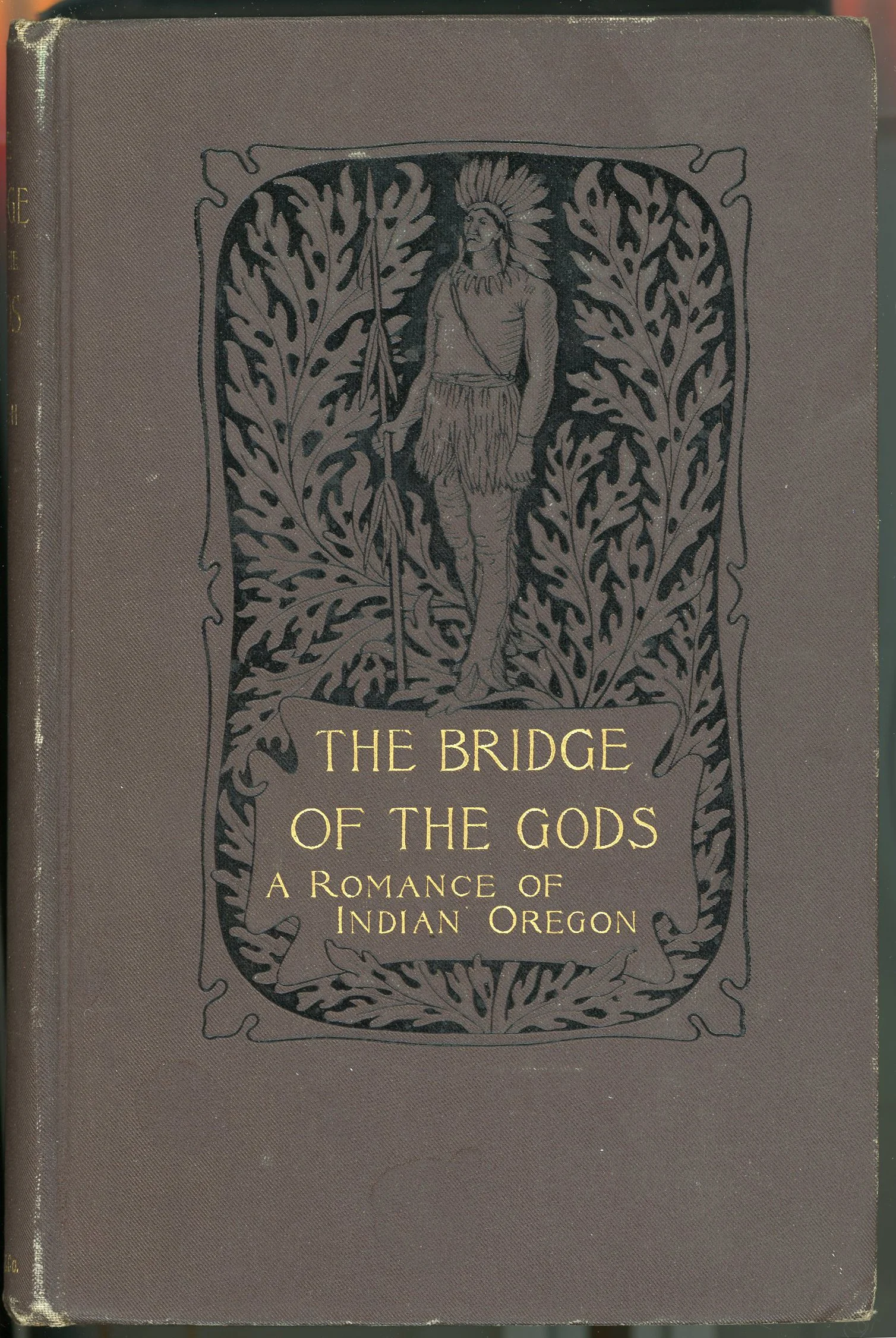
The first edition cover of “The Bridge of the Gods: A Romance of Indian Oregon” by Frederic Homer Balch, 1890.

Euro-American authors appropriated and romanticized these Indigenous stories. The most widely-read version was Frederic Homer Balch’s “The Bridge of the Gods: A Romance of Indian Oregon,” published in 1890. Balch did extensive interviews with Klickitat and Cascades elders to create this novel. Balch then took significant liberties developing his narrative, but is known for being the first Euro-American author to feature Indigenous characters in leading roles and for advocating that Indigenous knowledge should be accepted as historic fact. A commercial success, Balch popularized the legend and solidified the moniker “Bridge of the Gods” as a regionally significant and nationally recognizable name. This book was continuously in print for over 100 years, and inspired multiple stage and film adaptations.

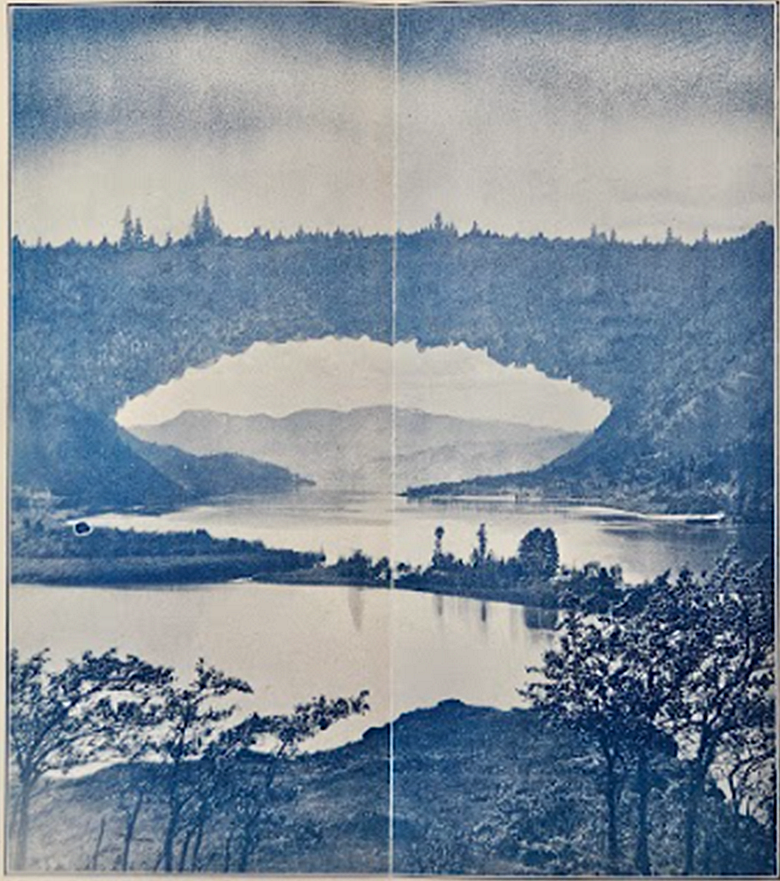
The romanticized versions of the Indigenous legends and the spectacular natural beauty of the Cascades captured the imagination of artists. Inspired by what they could see, artists imagined a sweeping stone bridge attached to the cliffs on Table Mountain. This vision was published in numerous popular texts. Art and storytelling were critical to garner public support for building the new Bridge of the Gods.
Stocks, Spans, and Showmen

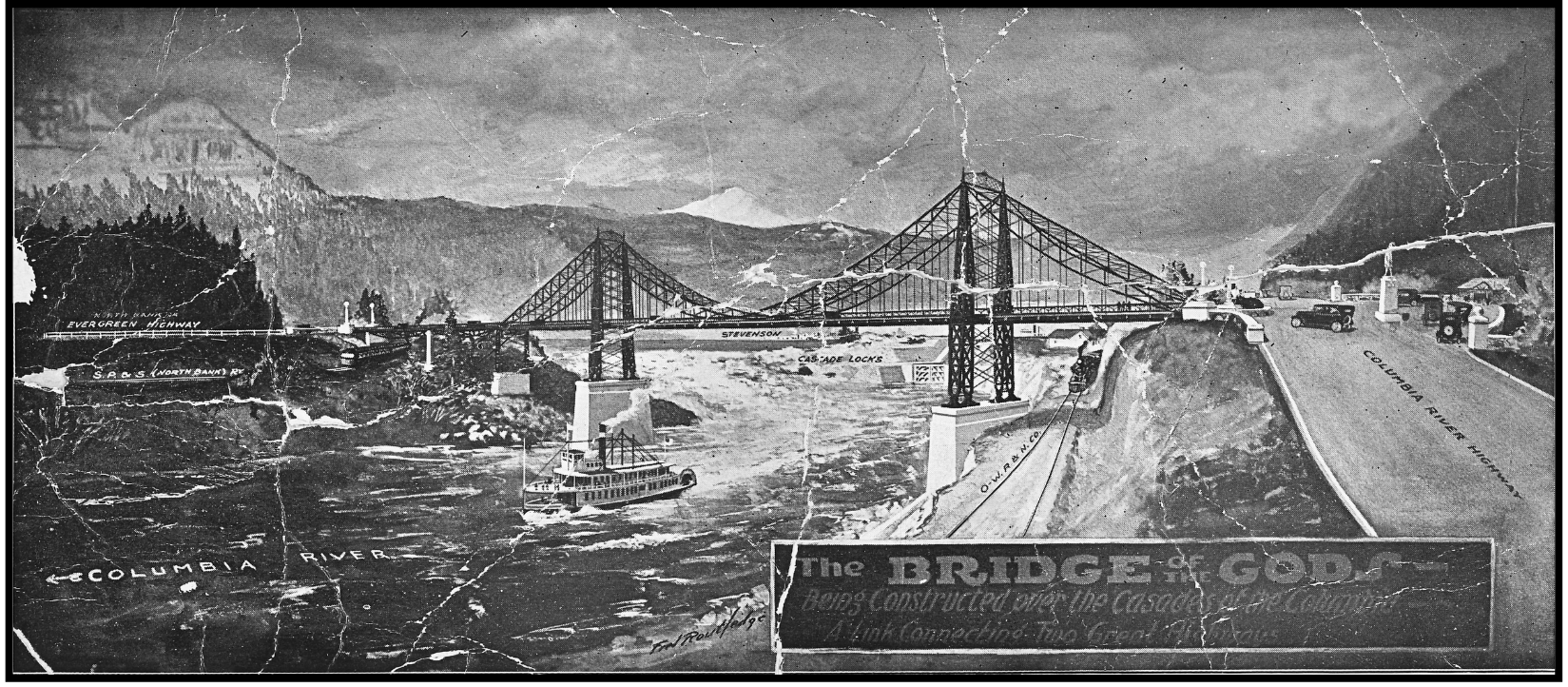
The Bridge of the Gods Corporation was approved to sell $300,000 worth of stock in Washington in 1921 and $250,000 of stock in Oregon in 1923. Stock sold for $1 per share. R.R. Clark was hired to design and engineer the bridge. L.A. Thomas served as a consulting architect. They favored a suspension bridge, stating that this design would best sustain strong Gorge winds. The Young McDonald Company built the first pier in April of 1922.

Artistic rendering of the Bridge of the Gods as a suspension bridge with boats on the river and cars on the highway

The architectural rendering of the planned suspension bridge was widely distributed to promote the vision of a bridge, generate excitement, and attract investors. Rendering by Fred Routledge.

With a rendering printed and demonstrated commitment to the project complete, the Bridge of the Gods Corporation printed marketing pamphlets and began an aggressive sales campaign. They engaged the Portland Ad Club to conduct a grandiose dedication ceremony.

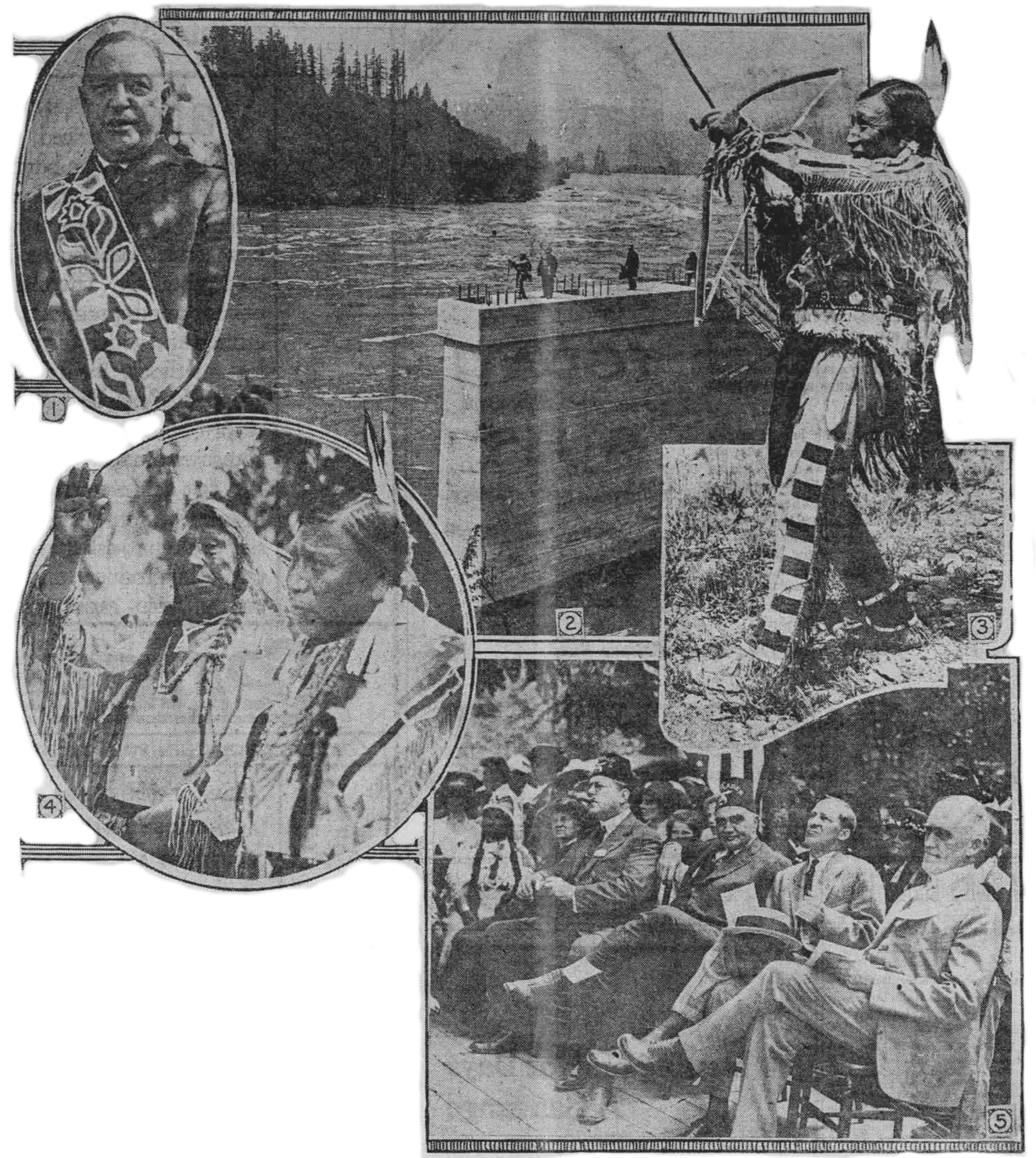
On June 16, 1922, 3000 people came to the future site of the Bridge of the Gods. Portland Ad Club president George Rauch welcomed and introduced celebrity speakers throughout the event. George S. Allen, Governor Ben Olcott of Oregon, and Secretary of State J. Grant Hinkle of Washington gave short speeches celebrating the vision. Frederic Homer Balch’s sister, Gertrude Balch Ingalls, brought a bouquet of flowers from the Balch family farm in Hood River. She dedicated the flowers to her brother and to Chief Multnomah, who Balch had immortalized in his novel.

The headline speaker was Wasco-Klickitat elder Martin Spedis. Spedis gave the speech in his language with his son, Dave, as translator. The Spedis men were later joined by their wives, Ellen and Susie, and sister Lucy to perform a ceremony and dance.

Upon noticing him the audience, Rauch asked singer Walter Jenkins to lead some old-time songs. Portland Mayor George Baker closed the speeches.

To complete the dedication, the group gathered at the edge of the land. Dave Spedis shot an arrow from the completed pier across the river to symbolize the reconnection of the two landmasses and designate where the next pier should be built.

The Morning Oregonian ran this photo spread following the dedication ceremony on June 19, 1922. Photos include (1) George S. Allen, the originator of the Bridge of the Gods enterprise. (2) Completed pier on the Oregon shore of the river. (3) Dave Spedis shot the ceremonial arrow to symbolize the rejoining of the two sides of the river. (4) Martin Spedis gave a dedication speech with his son Dave as interpreter. (5) Speakers and presenters from left to right, Susie Silas Spedis, Gertrude Balch Ingalls, Portland Mayor George Baker, Oregon Governor Ben Olcott, Washington Secretary of State J. Grant Hinkle.